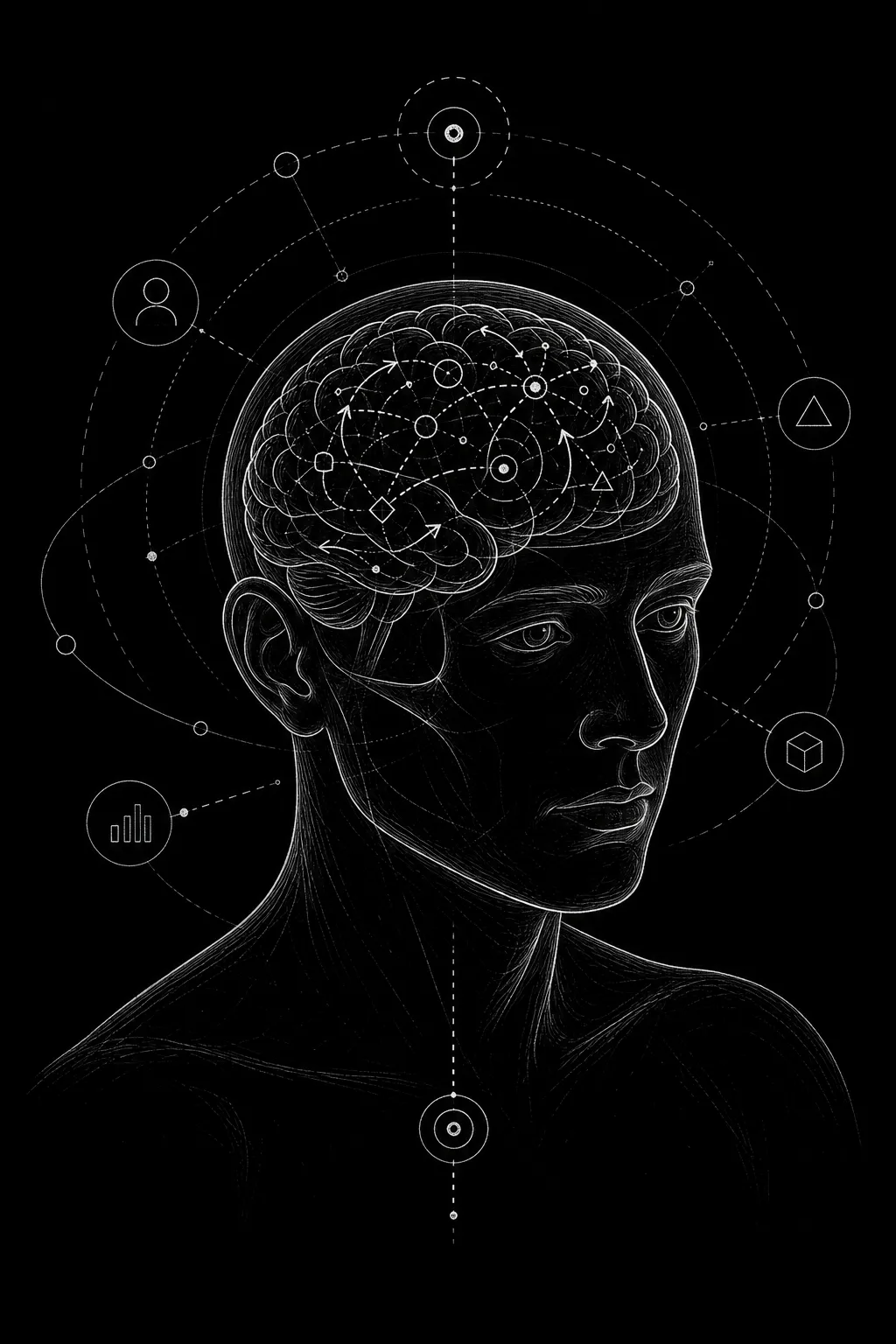
It’s hard to develop soft-products without understanding how people think. Thinking isn’t always a linear journey. That doesn’t mean that humans necessarily think in ways that are practical, but there is an intersection where the the thinking and the virtual thinking interact.
There are plenty of business processes that are efficient, but that doesn’t mean that they aren’t painful or that they cost about a billion-more braincells that a different process. And the benefit of working with AI isn’t just that it makes one more productive. There’s certainly something to be learned about “doing more stuff”.
What I’m talking about is reorienting a framework so that the cognitive load is efficient and the knowledge output is enhanced. We will always create faster and better machines, but will they bring us along with them or leave us behind.
This isn’t a criticism of productivity, it’s just an incomplete use of what’s available.
The teams building products that actually fit how people work are asking a different question. Not just what can AI do, but how do the people using this product actually think?
That’s metacognition. Awareness of your own cognitive processes; how you reason, how you decide, how you form mental models of the tools and systems around you. It’s not a new idea, but it’s become a critical one.
Why It Matters More Now
AI accelerates everything. That includes the distance between what a product team assumes about its users and what those users actually experience. Move fast enough without understanding cognition and you build something technically impressive that nobody naturally knows how to use.
Every user arrives at your product with a mental model already in place. A set of assumptions about how things work, what actions lead to what outcomes, where to look when something goes wrong. Product design has always been about meeting those models or deliberately reshaping them. AI doesn’t change that dynamic; it amplifies it.
Two Kinds of AI Thinkers
There are people integrating AI to do more; automate tasks, increase throughput, reduce friction in existing workflows. That has real value.
And there are people integrating AI to understand more; using it to surface patterns in how users behave, to pressure-test assumptions about what people actually need, to ask better questions before committing to a roadmap. That group tends to build better products.
The difference isn’t technical sophistication. It’s curiosity about cognition.
The Intersection Worth Designing For
AI is pattern recognition at scale. Humans bring context, judgment, and meaning. Those are not competing capabilities — they’re complementary ones, and the most interesting product work happens at their intersection.
Designing for that intersection means asking where AI can extend human thinking rather than replace it. Where can it surface something a person wouldn’t have seen on their own? Where does it hand back to human judgment at exactly the right moment? Where does handing off to AI actually degrade the quality of the decision?
These are design questions as much as they are technical ones.
What This Means for Product Strategy
Before you map your roadmap, map how your users think. What mental models are they bringing to your product? Where do those models break down? Where does AI fit naturally into their cognitive workflow — and where does it create friction they can’t articulate but will feel?
A few questions worth sitting with before your next AI feature:
- Are we adding this because it’s possible or because it fits how our users actually reason?
- Does this feature extend human judgment or bypass it?
- What does the user need to understand about themselves to get value from this?
- Are we making them faster, smarter, or both?\
The teams getting this right aren’t just building with AI. They’re thinking carefully about thinking — their users’, their own, and the space in between.